HJS Emission Control Systemsand the environment breathes freely

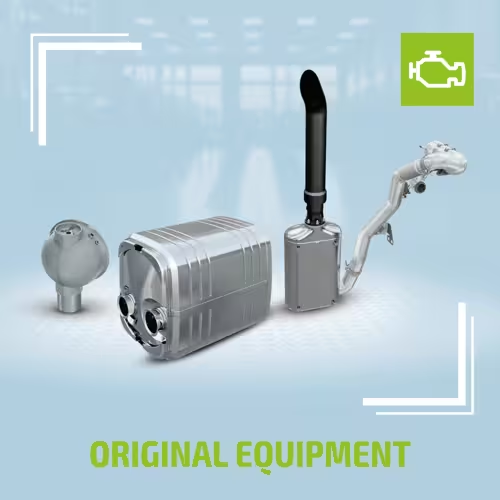
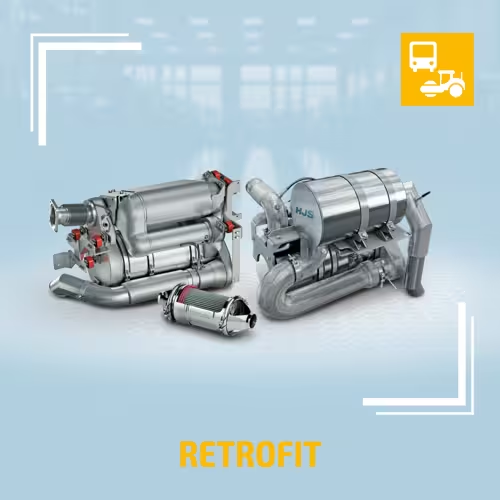
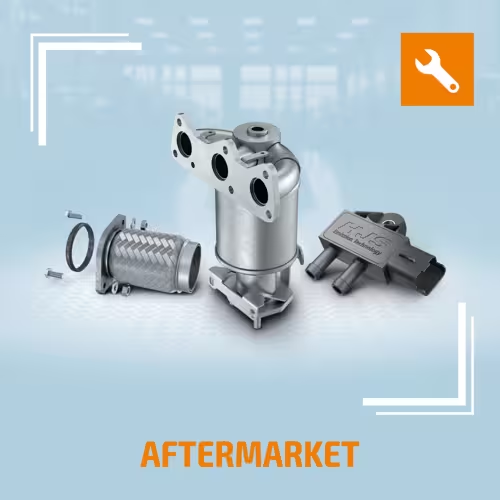
HJS has established itself internationally with the research, development and production of exhaust gas after treatment systems for petrol and diesel applications. As specialists, we intend to continue to set international standards. Today, our main focus lies on diesel exhaust technologies.

Reduction of particulate matter (PM) - The HJS Sintered Metal Filter (SMF®) is made of high-alloy, corrosion-resistant metal powders in combination with reinforcing carrier materials made of the same substance. This assures a long life-span of the filter material. The HJS SMF® is 100% recyclable.

HJS offers a variety of Emission Control Technologies for Commercial and Passenger Vehicles

Diesel Exhaust Systems for Commercial Vehicles

by DES an affiliate of HJS Group
  • CRT® - system
    Continuously Regenerating Trap
    Reduction of carbon monoxide, hydrocarbons and soot particles
  • SMF® - system
    Sintered Metal Filter
    Reduction of soot particles
  • Silencer with integrated Oxidation-Catalyst
    Reduction of carbon monoxide and hydrocarbons
HD vehicles

Diesel Exhaust Systems for Passenger Vehicles

  • Original DPF® City-Filter
    Reduction of carbon monoxide, hydrocarbons and soot particles
  • Catalytic converters
    Reduction of carbon monoxide, hydrocarbons and nitrogen oxides
  • Mounting parts
    for silencers and catalytic converters
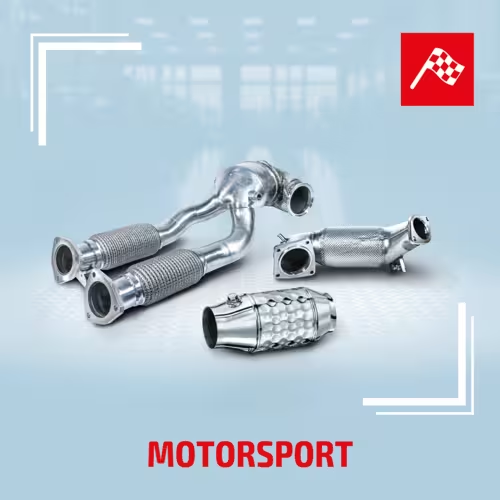
  • Motorsport
    Exclusive supplier of the top teams
LD vehicles

German Environmental Award

In 2003 HJS received the German Environmental Award for the development of the Sintered Metal Filter. Decisive advantages are offered through the particular properties of the sintered metal and the modular structure of the filter. The use of the HJS particulate filter guarantees soot-free diesel exhaust gas.

VERT-certified

In Switzerland, diesel soot is classed as a carcinogenic pollutant, both in the Suva list “Limit values at the workplace” and under the Air Quality Control Regulation. It is therefore vital that the emission levels of these substances are minimised using the best available technology - as defined in the VERT list.