European Transient Cycle (ETC)
Time-speed-torque points (ETC cycle) | Time-speed points (FIGE cycle)
The ETC test cycle was introduced, together with the ESC (European Stationary Cycle), for emission certification of heavy-duty diesel engines in Europe starting at the Euro III stage (2000) (Directive 1999/96/EC of December 13, 1999). The ESC and ETC cycles replaced the earlier R-49 test and were used for engine emission certification through the Euro V stage. The Euro VI (2013) emission standards replaced the ESC/ETC by the WHSC/WHTC test cycles, respectively.
The ETC cycle (once also referred to as FIGE transient cycle) has been developed by the former FIGE Institute, Aachen, Germany, based on real road cycle measurements of heavy duty vehicles [5949]. The final ETC cycle is a shortened and slightly modified version of the original FIGE proposal.
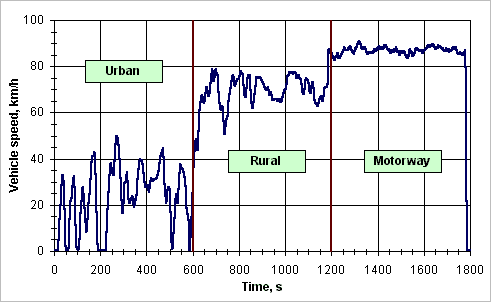
Different driving conditions are represented by three parts of the ETC cycle, including urban, rural and motorway driving. The duration of the entire cycle is 1800s. The duration of each part is 600s.
- Part one represents city driving with a maximum speed of 50 km/h, frequent starts, stops, and idling.
- Part two is rural driving starting with a steep acceleration segment. The average speed is about 72 km/h
- Part three is motorway driving with average speed of about 88 km/h.
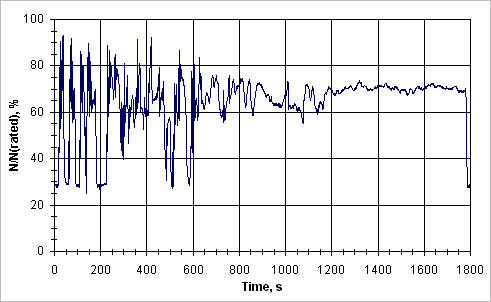
FIGE Institute developed the cycle in two variants: as a chassis and an engine dynamometer test. Vehicle speed vs time over the duration of the cycle is shown in Figure 1 (the vehicle version of the FIGE cycle has never been standardized). For the purpose of engine certification/type approval, the ETC cycle is performed on an engine dynamometer. The pertinent engine speed and torque curves are shown in Figure 2 and Figure 3.